
CKYC Registration: Simple Step by Step Process
I still remember the first time a bank asked me for my CKYC number instead of asking me to fill out the usual KYC form again. I had no idea what it meant, so I ended up spending almost an hour trying to figure out where this number comes from and how to register for it. Once I actually went through the process, it turned out to be much simpler than I expected.
If you are opening a new bank account, applying for a loan, or investing in mutual funds, chances are you will run into the term CKYC Registration at some point. This guide covers exactly what it is, why it matters, and how to complete the registration without confusion. It is similar in spirit to other financial checks we have covered before, like Gold Loan Interest Rates in Tamil Nadu, where understanding the process beforehand saves you time at the counter.
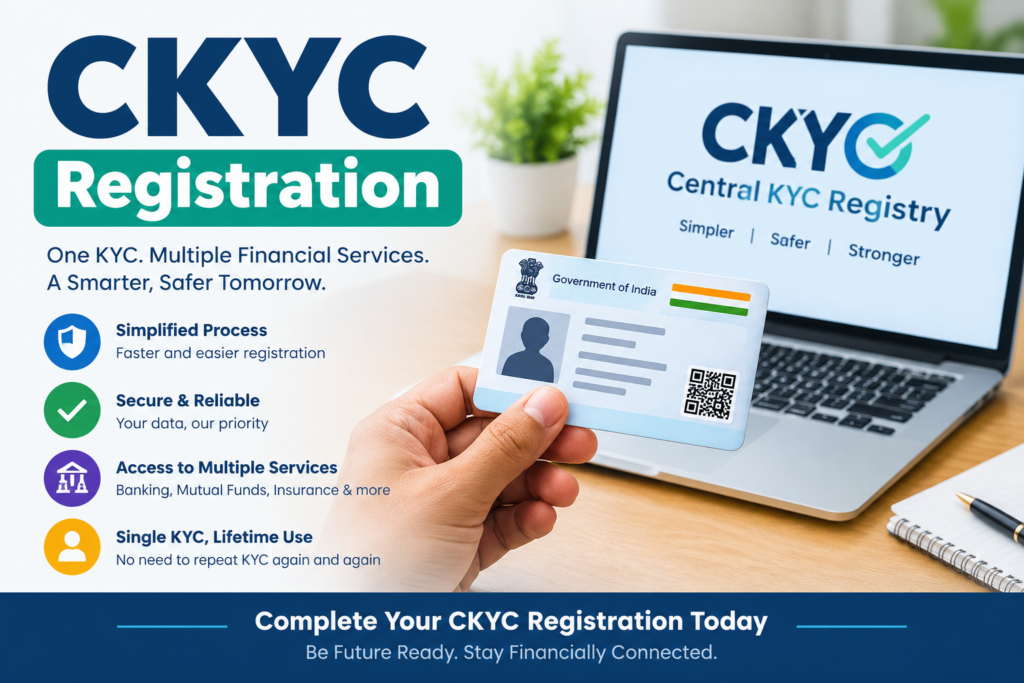
What Is CKYC Registration?
CKYC stands for Central KYC Registry. It is a centralized system in India where your KYC, meaning Know Your Customer, details are stored in one place. Once your CKYC registration is done, you do not need to submit your identity and address proof again and again every time you open an account with a new bank, mutual fund, or insurance company.
Before CKYC existed, every financial institution asked for separate KYC documents, even if you had already completed KYC somewhere else. CKYC removed that repetition by linking your details to a single 14 digit number, known as the CKYC Identification Number, or KIN.
Why CKYC Registration Matter
It saves time since you do not have to repeat KYC for every new financial account.- It reduces paperwork, since most institutions can simply pull your existing CKYC record.
- It is required for most regulated financial activities, including bank accounts, mutual funds, insurance policies, and demat accounts.
- It helps prevent identity fraud since your verified details are linked to one central record.
Documents Required for CKYC Registration
Before you begin, keep these documents ready. Most banks and financial institutions ask for the same basic set.
- PAN Card
- Aadhaar Card
- A recent passport size photograph
- Proof of address, if different from Aadhaar
- A valid mobile number linked to Aadhaar, for OTP verification
Having clear scanned copies or physical originals ready before you start saves you from restarting the process halfway through.
How to Complete CKYC Registration
CKYC registration is usually done through the bank, mutual fund house, or financial institution where you are opening your account, not through a separate portal you fill out on your own. Here is how the process generally works.
- Visit your bank branch, NBFC, or the online portal of the financial institution you are dealing with.
- Fill out the CKYC form, either physically or through their online KYC section.
- Submit your PAN, Aadhaar, and photograph as required.
- Complete biometric or OTP based e-KYC verification, depending on what the institution offers.
- The institution forwards your details to CERSAI, the body that manages the Central KYC Registry.
- Once processed, you receive a 14 digit CKYC Identification Number, called your KIN.
This number is what future institutions will ask for instead of requesting your full documents again.
How to Check Your CKYC Number
If you have already completed KYC with any bank or mutual fund recently, there is a good chance a CKYC record already exists for you.
- Visit the CERSAI CKYC search portal.
- Enter your PAN number or the Aadhaar linked details as requested.
- Complete the OTP verification sent to your registered mobile number.
- If a record exists, your 14 digit KIN will be displayed on the screen.
If no record shows up, it usually means your KYC has not been linked to CKYC yet, and you will need to complete a fresh registration with your bank or financial institution. This is the same kind of registration step you will notice in apps like the Kooturavu Loan App, where identity verification is required before any loan process can move forward.
Common Issues During CKYC Registration
KIN not generated yet: It can take a few working days after submission for your KIN to be processed and reflected in the system.- Mismatch in details: If your name or address differs between PAN and Aadhaar, the process can get delayed. Keep both documents updated and matching.
- OTP not received: Confirm that your mobile number is actively linked to your Aadhaar before starting.
- Old KYC not updated: If you registered KYC before CKYC became mandatory, some institutions may ask you to complete it again through the CKYC process.
Is CKYC Registration Mandatory?
Yes, CKYC registration is required for most regulated financial transactions in India, including opening bank accounts, investing in mutual funds, buying insurance policies, and trading in the stock market. Without it, institutions may not be able to process your application, or they may ask you to complete a fresh KYC before moving forward.
Final Thoughts
CKYC registration might sound like just another form to fill out, but it genuinely simplifies things once it is done. Instead of repeating your KYC every time you deal with a new bank or financial institution, your details stay linked to one number that institutions can verify instantly.
If you are opening a new financial account soon, it is worth checking whether you already have a CKYC number before submitting fresh documents. It could save you a good amount of paperwork and time.
Frequently Asked Questions

Hi, I’m Vikram Ashwin, a technology writer who enjoys covering useful apps, digital tools, photo editing trends, and the latest tech topics. My goal is to share clear information, useful tips, and straightforward explanations without unnecessary technical language.